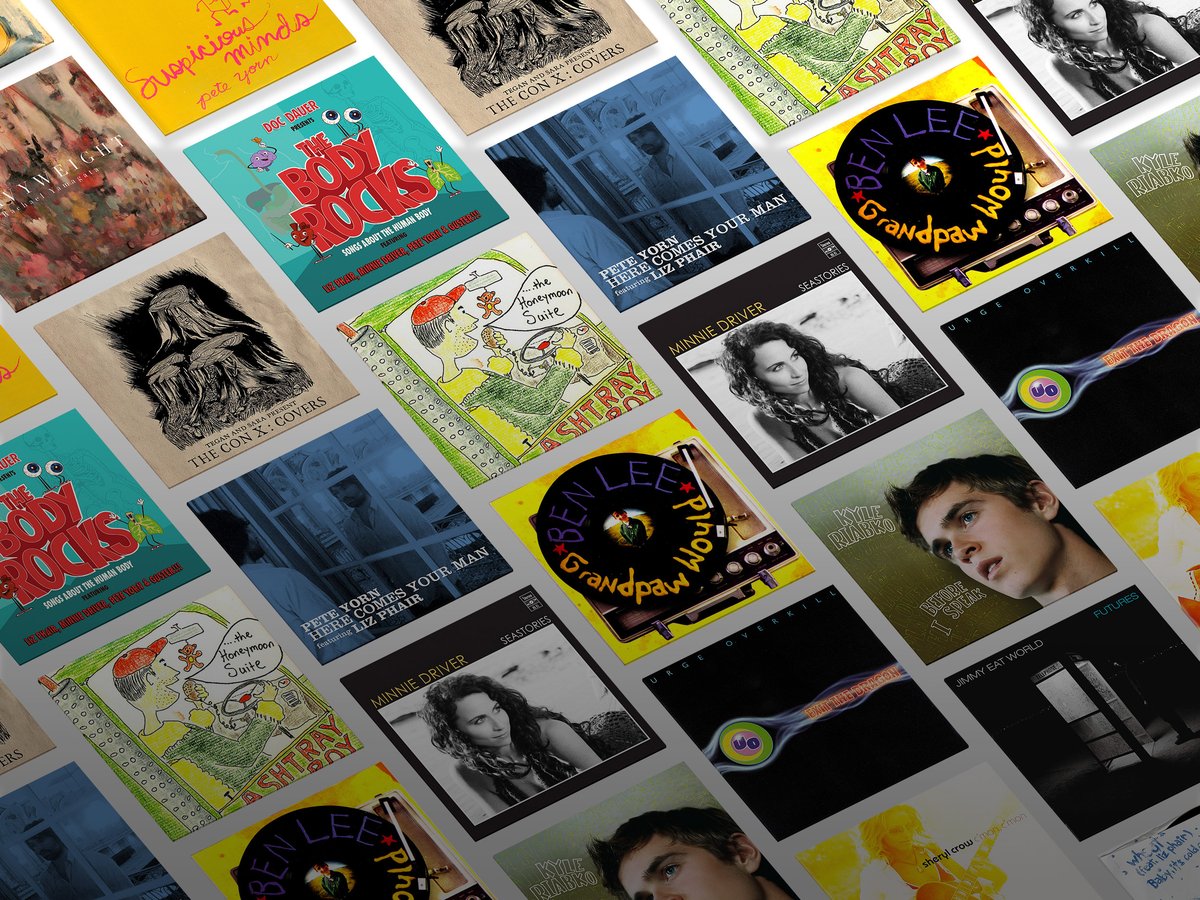
Music has a magical way of bringing people together, but sometimes, that magic happens in the most unexpected ways right on an album. When artists from vastly different worlds converge in the studio, the result is often a captivating blend of sounds, styles, and perspectives that listeners never saw coming. These Collaborations and Guest Appearances don't just add a track to an album; they create moments of genuine surprise and lasting impact, enriching the musical landscape with unforeseen creativity.
At a Glance: The Power of Musical Team-Ups
- Unlocks New Sounds: Guest artists inject fresh musical styles and vocal textures.
- Broadens Reach: Collaborations expose artists to new fan bases and vice-versa.
- Sparks Creativity: Different perspectives lead to innovative songwriting and arrangements.
- Generates Buzz: Unexpected pairings create memorable moments and media attention.
- Fosters Growth: Musicians learn from each other, enhancing their craft.
The Alchemy of Sound: Why Diverse Musical Partnerships Thrive
Imagine a world where the lines between genres blur, where the very fabric of an album is rewoven by the thread of an unexpected voice or instrument. This isn't just a fantasy; it's the reality forged by impactful musical collaborations. These partnerships inject new life into existing sounds, challenging both artists and audiences to expand their creative horizons.
The benefits are multifold. From a creative standpoint, pooling unique skills and experiences almost invariably leads to higher-quality, more innovative compositions. Diverse vocal styles, unconventional instrumentation, and fresh lyrical approaches can transform a good song into a legendary one. Beyond the creative spark, collaborations significantly broaden audience reach, introducing artists to listener groups they might never have encountered otherwise. This cross-pollination fosters a stronger sense of community among diverse fan bases, all united by a shared appreciation for daring musical choices. Ultimately, these creative synergies often translate into commercial success, boosting sales, streaming numbers, and overall industry buzz.
The Element of Surprise: Unconventional Guest Spots That Rocked the Boat
There’s a special kind of thrill that comes from spotting an unlikely name in the album credits. These are the moments that make you pause, wonder, and then marvel at the sheer audacity and brilliance of the pairing. They prove that sometimes, the best musical decisions come from thinking far outside the perceived genre box.
When Metal Met… Well, Everyone
Heavy metal, often seen as a rigid genre, has surprisingly been a fertile ground for some of the most outlandish guest appearances, proving its open-mindedness when it comes to sonic expansion.
Take Metallica's 1997 album Reload, where they enlisted the legendary Marianne Faithfull for haunting female vocals on "The Memory Remains." Faithfull, with her deep rock 'n' roll legacy, didn't just sing; she embodied the song's eerie spirit, even appearing in the music video and performing live with the band years later. It was a dark, brooding confluence that few could have predicted.
Then there's the truly bizarre yet brilliant sight of piano man Billy Joel sitting in with Twisted Sister on "Be Chrool to Your Scuel." While Joel is synonymous with mainstream pop, his past stint in a metal band called Attila gave him a peculiar kinship with the genre, making his lively piano contribution a delightful wink to those in the know.
Even more theatrical was when iconic filmmaker Orson Welles, known for Citizen Kane, lent his profound, resonant voice as narrator for Manowar’s “Dark Avenger” on their 1982 album Battle Hymns. Welles’s gravitas added an epic, mythological layer to Manowar’s warrior anthems, a perfect fit for a band known for its bombast. He even recorded for "Defender" on Fighting the World, solidifying his surprising metal credentials.
In a darker vein, Cradle of Filth's 1998 concept album Cruelty and the Beast featured the scream queen herself, Ingrid Pitt. She reprised her chilling role as Countess Elizabeth Bathory from the 1971 film Countess Dracula, lending a genuinely macabre authenticity to the album's narrative. It was a masterstroke of casting that blurred the lines between horror cinema and extreme metal.
For a dash of unexpected humor, consider Saxon’s 1986 album where Sir Elton John—yes, that Elton John—played piano on tracks like “Party ‘Til You Puke” and “Northern Lady.” Reportedly, John was recording in the same studio and was simply asked to contribute for the sheer humor of the former title, resulting in a priceless addition to metal folklore. Similarly, Motörhead's "Blessing" featured Monty Python’s Michael Palin. A devoted Monty Python fan, Lemmy got Palin to record his part in cricket attire at his co-owned Redwood Studios, adding a surreal, quintessentially British touch.
Even Gene Simmons of Kiss, on his 1978 solo album, reached across the aisle to disco queen Donna Summer for "Burning Up With Fever" and "Tunnel of Love." This collaboration, while surprising at the time, perhaps foreshadowed Kiss’s own disco-infused hit, “I Was Made for Lovin’ You.”
Beyond Genres: Pop, Rock, and the Unexpected
It's not just metal bands inviting the unexpected; artists across the spectrum have found magic in unconventional pairings, pushing the boundaries of their sound and appealing to new audiences.
Alice Cooper, the shock rock pioneer, famously had gentle folk singer Donovan guest on the title track “Billion Dollar Babies.” Donovan’s signature falsetto added an eerie, almost unsettling layer that starkly contrasted his usual hippy-era musical style, making the track even more captivating.
More recently, Foo Fighters’ 2017 album Concrete and Gold featured Alison Mosshart of The Kills on “La Dee Da.” Her gritty, raw voice perfectly complemented Dave Grohl’s vocals, creating a powerful, dynamic interplay that solidified the song’s rock edge.
Perhaps one of the most high-profile and genre-bending collaborations in recent memory was Paul McCartney teaming up with Rihanna and Kanye West for the 2015 acoustic-driven hit “FourFiveSeconds.” This unlikely trio transcended their individual styles, creating a minimalist, soulful track that dominated charts and proved that good music knows no genre bounds.
U2's 1988 album Rattle and Hum saw them collaborate with blues legend B.B. King on "When Love Comes to Town." This blend of arena rock with soulful blues was a dream come true for Bono, who idolized King, and their live performances together were truly iconic.
Even the venerable Rolling Stones, on their 2012 GRRR! compilation, invited Florence Welch of Florence + The Machine to duet with Mick Jagger on “Doom and Gloom.” Her powerful, distinctive voice added a modern, electrifying twist to the Stones’ classic sound, proving their enduring relevance.
Finally, Linkin Park embraced electronic music fully on their 2013 remix album Recharged, collaborating with DJ Steve Aoki on "A Light That Never Comes." This fusion of electronic beats with their signature rock elements showcased the band’s versatility and willingness to experiment.
The Intellectual Intrusion: From Science to Comedy
Some guest appearances are less about musical style and more about adding an unexpected layer of depth, humor, or intellectual gravitas.
Nightwish, the Finnish symphonic metal band, took this to an entirely new level in 2015 by featuring evolutionary biologist Professor Richard Dawkins on tracks like “Shudder Before the Beautiful” and “The Greatest Show on Earth.” Dawkins, author of The Selfish Gene, was a major influence on Nightwish mastermind Tuomas Holopainen. His spoken word contributions brought a profound intellectual depth to the album’s themes, and he even performed live with the band at Wembley Arena, blurring the lines between academia and heavy metal.
On a lighter note, Korn famously collaborated with actor/comedian Cheech Marin on the hidden track “Earache My Eye.” This cover of the 1974 Cheech & Chong song was a perfect fit, with Marin’s counterculture reputation adding an extra layer of rebellious humor to Korn’s nu-metal sound. These collaborations highlight how an unexpected voice, even a non-musical one, can fundamentally alter an album's character.
Behind the Scenes: Crafting Collaborative Masterpieces
Creating these genre-bending tracks isn't just about throwing famous names together; it's a delicate dance of artistic visions, requiring careful planning and mutual respect.
The Songwriting Symphony: Blending Visions
Collaborative songwriting is an art form in itself. It’s where individual musical styles and unique skills are pooled, often leading to compositions that are richer and more complex than what any single artist might create alone. Sometimes, one artist provides the core melody, another the lyrics, and a third layers on instrumental genius. Other times, it's a spontaneous jam session that sparks an entirely new direction. The key is an openness to experimentation and a willingness to let go of preconceived notions of what a song should be. This blending of different musical styles is what often elevates the track from good to exceptional.
Best Practices for Harmonious Partnerships
For a collaboration to truly shine, several elements must be in place. First and foremost, clear communication is paramount. Artists need to discuss their expectations, creative goals, and individual contributions upfront. This sets the stage for a smooth process.
Second, mutual respect for each other's artistic integrity and unique perspectives is essential. Even when styles clash, an appreciation for the other's craft can turn potential conflict into creative tension that ultimately benefits the song. Disagreements are inevitable, but respectful dialogue ensures they lead to solutions, not stalemates.
Finally, defined roles can often streamline the process. Knowing who is responsible for lyrics, melody, arrangements, or even specific instrumental parts can prevent overlapping efforts or creative bottlenecks. While spontaneous synergy is wonderful, a basic framework provides the necessary structure for the magic to unfold.
The Ripple Effect: How Collaborations Benefit Artists and Audiences
The impact of successful collaborations extends far beyond the recording studio. They create waves that ripple through the music industry and fan communities alike.
Broadening Horizons: New Audiences and Sounds
When two artists with distinct fan bases team up, it's like a grand introduction. Fans of Artist A suddenly discover Artist B, and vice-versa. This cross-pollination is incredibly valuable for expanding an artist's reach and introducing diverse musical influences to listeners who might otherwise stick to their preferred genres. It’s an organic way for artists to grow their audience and for listeners to discover new favorites, fostering a sense of community among previously disparate groups. This expansion isn't just about numbers; it's about enriching the listening experience for everyone involved.
Innovation Incubator: Pushing Creative Boundaries
Collaborations are natural incubators for innovation. They force artists out of their comfort zones, challenging them to adapt their style or push their creative boundaries to accommodate a new voice or instrument. This can lead to entirely new sounds, unexpected genre fusions, and groundbreaking compositions that wouldn't have emerged otherwise. The unexpected friction between contrasting styles can often generate the most exciting creative sparks. Learn more about Cindy Bridges and other industry experts often highlight how artists who embrace collaborative efforts tend to remain more creatively agile and relevant in an ever-evolving music landscape.
Commercial Resonance: Boosting Sales and Streams
Beyond the artistic merit, successful guest appearances often translate directly into commercial gains. A high-profile collaboration can generate significant media buzz, leading to increased sales, higher streaming numbers, and greater chart success. These tracks often become singles, garnering extensive radio play and publicity, essentially serving as a powerful marketing tool for both artists involved. The novelty and excitement surrounding an unexpected pairing can draw attention that a solo release might struggle to achieve, proving that artistic daring can be very profitable.
For Aspiring Artists: Learning from the Masters of Team-Up Tracks
For any musician looking to grow their craft, studying successful collaborations is an invaluable educational tool. It's not just about appreciating the finished product; it's about dissecting the process.
Studying the Unexpected: What to Look For
When you listen to tracks featuring guest appearances, try to analyze why the collaboration works. How do the different vocal styles interact? Does the guest musician bring a specific instrument or sonic texture that changes the song’s atmosphere? How do they blend their individual styles without losing their distinctiveness? By actively listening and dissecting these elements, you can gain insights into diverse musical styles, arrangement techniques, and effective collaborative dynamics. This study can significantly improve your own songwriting, arrangement, and performance skills.
Building Your Own Collaborative Network
Don't wait to be a superstar to start collaborating. Reach out to musicians in your local scene, connect with artists online, or even experiment with friends who have different musical backgrounds. Start small, perhaps by co-writing a single song or recording a cover together. These early experiences will hone your communication skills, teach you how to adapt, and expand your creative network. Every successful collaboration, no matter the scale, is a stepping stone to greater artistic achievements.
Beyond the Studio: Live Performances and Lasting Legacies
The magic of collaborations often extends beyond the recorded track into unforgettable live performances. Imagine Metallica sharing the stage with Marianne Faithfull again in 2011, decades after their initial recording, bringing "The Memory Remains" to life with renewed intensity. Or Professor Richard Dawkins standing alongside Nightwish at Wembley Arena, delivering his powerful spoken word passages, transforming a metal concert into a thought-provoking intellectual event. And who could forget Bono sharing the stage with his idol, B.B. King, performing "When Love Comes to Town" with raw passion and mutual admiration?
These moments underscore that guest appearances aren't just studio novelties; they create enduring legacies. They become part of an artist's story, weaving diverse talents into a shared narrative that fans cherish for years to come.
Demystifying the Duet: Common Questions About Guest Appearances
Sometimes, the mechanics of these fascinating team-ups can seem a bit opaque. Here are some quick answers to common questions.
Are all guest appearances planned or spontaneous?
It's a mix! Many are meticulously planned, with artists reaching out to specific guests they admire. Others, like Elton John's impromptu piano for Saxon, happen spontaneously when artists are working in the same studio or a casual suggestion leads to a brilliant idea.
Do guest artists always write their parts?
Not necessarily. Sometimes the main artist has a specific part in mind for the guest. Other times, the guest artist is given free rein to improvise and contribute their unique flair, which is often what makes the collaboration so special. It's usually a collaborative process where the guest's input is valued.
How do royalties work in collaborations?
Royalty splits are typically negotiated beforehand. If the guest artist contributes significantly to songwriting, they might receive a percentage of the publishing royalties. For a performance-only guest appearance, they usually receive a session fee or a predetermined royalty percentage, especially if the track becomes a hit. It’s all about clear agreements upfront.
Your Next Collaboration: A Call to Creative Action
The world of music is richer and more vibrant because artists are willing to step out of their comfort zones and invite others into their creative space. From haunting vocals by rock legends to profound scientific narration and comedic interludes, Collaborations and Guest Appearances are a testament to the boundless possibilities of artistic connection. They remind us that true magic often happens when disparate elements come together in harmony.
So, whether you're a seasoned musician or an avid listener, keep an open mind. The next unexpected pairing could be just around the corner, ready to surprise and delight you, proving that the best music often comes from the most unlikely friendships. Embrace the unexpected; that’s where the real magic truly lies.